 2024, Vol. 41
扩展功能

文章信息
- 张禄, 周炜, 张学文.
- ZHANG Lu, ZHOU Wei, ZHANG Xue-wen
- 基于应力等效关系的汽车零部件疲劳寿命预测模型
- Model for Fatigue Life Prediction on Auto Parts Based on Stress Equivalence Relation
- 公路交通科技, 2024, 41(5): 171-177
- Journal of Highway and Transportation Research and Denelopment, 2024, 41(5): 171-177
- 10.3969/j.issn.1002-0268.2024.05.020
-
文章历史
- 收稿日期: 2023-08-18


2. 运输车辆运行安全技术交通运输行业重点实验室, 北京 100088
2. Key Laboratory of Operation Safety Technology on Transport Vehicle, Beijing 100088, China
因交变载荷作用产生的疲劳破坏是汽车疲劳耐久性研究及试验极为关注的项目之一[1]。Miner首先提出了可以解释金属材料疲劳破坏机理的累积损伤判定准则,因该准则的简便性,至今仍在工程中广泛应用[2-3]。后续相关研究人员发现,当加载应力顺序发生变化时,Miner准则所预测累积疲劳损伤会有明显偏差[4]。因此,相关学者从不同角度探讨了累积疲劳损伤的演化过程。
为考虑应力作用次序的影响,有大量学者建立了很多非线性疲劳寿命预测模型,例如,基于能量[5-7]、损伤曲线[8-9]、材料强度退化[10-11]、连续损伤力学[12-13]等。这些非线性模型中,因损伤曲线的计算便利性而备受关注,Manson等[14-15]提出了双线性损伤规则,将两条线的交点设为膝点,然后提出了改进的双损伤曲线法模型。同时,也有研究者对疲劳积累的非线性模型进行了研究,Marco最早提出非线性累积损伤理论,相关学者基于此开展研究工作[16],而后Manson与SAbramanya等[14]分别进一步提出基于有效微观裂纹增长与基于材料S-N特性的固定拐点的非线性疲劳累积损伤模型[17]。此外Hashin等[18]也提出了考虑S-N曲线中一个拐点的幂律法则来预测剩余损伤,该方法需要设定疲劳极限对应的疲劳寿命;Shang等[19]基于疲劳损伤过程中材料延性的演化规律,提出了一种新的非线性疲劳累积损伤模型。Yao等[20-22]根据强度退化或刚度退化与疲劳损伤的等效原理,构建了疲劳累积损伤模型。Djebli等[23]提出了一种基于能量参数应用的非线性疲劳累积损伤模型。Mesmacque等[24]定义了损伤应力,提出了一种新的多级加载时按顺序规律的损伤模型,该模型计算需要材料的极限应力。
对上述相关模型分析可知,相关的拐点、疲劳极限对应的疲劳寿命、极限应力等均需进行一定量的试验。实际工程应用可能无法获取足够的疲劳加载试验数据。为此,建立一种考虑相邻载荷作用等效转化的关系
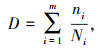
汽车零部件疲劳是在受到交变载荷作用下损伤逐渐累积的过程,每次载荷循环都将产生一定的损伤。Miner最早提出了疲劳累积损伤准则。Miner疲劳累积损伤公式为:
|
(1) |
式中,D为疲劳累积损伤变量;ni为交变应力Si作用的循环数;ni为交变应力Si作用下的疲劳寿命。
Miner法则认为当疲劳累积损伤D=1时,即为失效。
其中,材料应力幅值与疲劳寿命曲线的关系可以基于Basquin模型[25],其关系式为:

|
(2) |
式中, b,K可通过疲劳试验数据拟合确定。
1.2 非线性模型大量疲劳试验指出,载荷次序对损伤影响的特点为:高低作用次序的循环载荷下,发生疲劳破坏时的疲劳累积损伤 

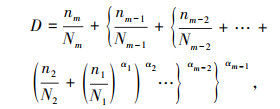
为此,为考虑加载次序对疲劳累积损伤的影响,Marco等提出非线性疲劳累积损伤模型:
|
(3) |
式中,α1, α2, …,αm为作用系数;m为加载应力的级数。
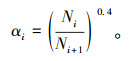
Manson基于大量试验数据确定作用系数:
|
(4) |
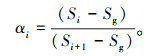
Subramanyan根据基准应力幅值Si+1和疲劳极限应力Sg,给出了作用系数为:
|
(5) |
Hashin利用疲劳极限应力Sg时的疲劳寿命Ng,基准应力幅值Si+1对应疲劳寿命Ni+1,也作出了不同的表述,对应的作用系数为:
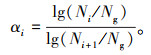
|
(6) |
非线性模型在多级应力加载中能得到较好应用。Manson模型是根据大量试验数据确定相应系数为0.4,默认该系数均恒定不变,无相关物理量与其关联。Subramanyan模型和Hashin模型虽与相关材料的疲劳极限及其对应疲劳寿命有关联,但在实际工程应用中,疲劳极限的获取需要较多的试验时间和较大成本。
为此,建立两级应力加载作用下的相邻应力等效转化关系为:

|
(7) |
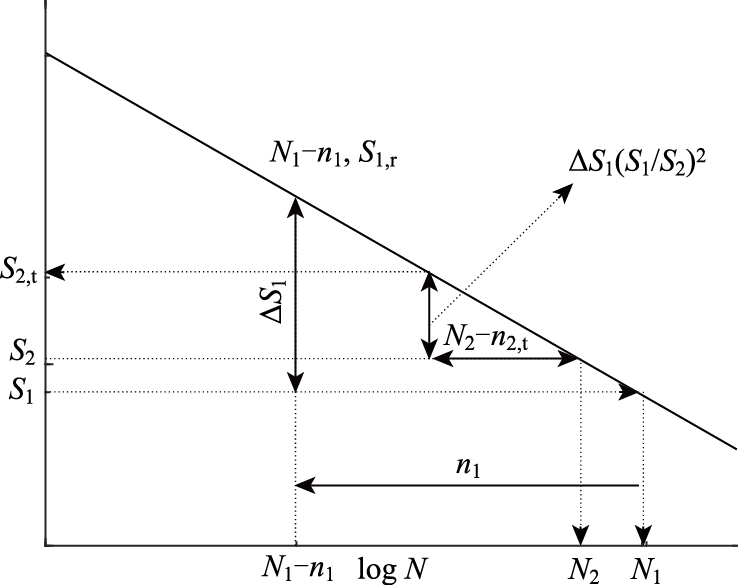
具体过程如下:如图 1所示,第1级应力S1对应的疲劳寿命N1,当第1级应力作用了n1后的疲劳损伤为d1所对应的剩余疲劳寿命为:
|
| 图 1 两级应力加载等效转化过程 Fig. 1 Transformation process under two-stage loading |
| |
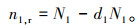
|
(8) |
N1, r在材料S-N特性曲线对应的等效应力为:
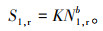
|
(9) |
定义等效应力之差:
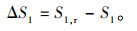
|
(10) |
提出第1级应力作用转化到第2级应力上的等效转化关系为:

|
(11) |
即第1级应力作用到第2级应力时,等效应力为:
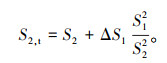
|
(12) |
通过S-N特性曲线可以进一步计算等效应力S2, t对应的疲劳寿命为:
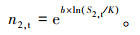
|
(13) |
此时等价于的剩余疲劳损伤为:

|
(14) |
即对于本模型的第1级应力造成的疲劳损伤为:
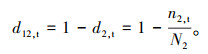
|
(15) |
对于3级及以上时,公式为:
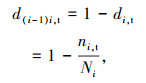
|
(16) |
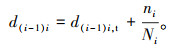
|
(17) |
通过计算d(i-1)i继续
因此,从第1级加载到第m-1级的疲劳累积损伤为d(m-1)m, t,若在第m级应力加载时发生疲劳,剩余的疲劳损伤即为 
在疲劳预测中,除了关注最后1级应力所预测的疲劳损伤与试验结果之间偏差,也需要兼顾载荷作用次序导致疲劳累积损伤的变化特点,为此采用如下相对误差作为评价指标[10]:
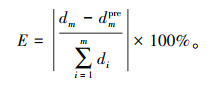
|
(18) |
选取了AL-2024[26]与30CrMnSiA[27]共2种材料的疲劳试验数据。每种材料应力均包含了高低加载和低高加载,不同应力水平下的疲劳寿命分别如表 1和表 2所示,可计算得到材料S-N相关系数如表 3所示。
| 应力幅值/MPa | 150 | 200 |
| 寿命均值/次 | 430 000 | 150 000 |
| 应力幅值/MPa | 482(最大应力732, 基准应力250) |
586(最大应力836, 基准应力250) |
| 寿命均值/次 | 55 757 | 7 186 |
| 材料 | AL-2024 | 30CrMnSiA |
| K | 5 189.39 | 1 366 |
| b | -0.273 0 | -0.095 4 |
基于AL-2024与30CrMnSiA材料的两级应力加载试验结果,分别运用Miner模型、Manson模型、Subramanyan模型、Hashin模型及新模型计算了疲劳损伤的预测结果,并进一步计算了疲劳损伤的相对误差及其平均值和最大值,试验结果与各种模型的预测结果的汇总分别如表 4和表 5所示。通过5种模型预测结果的对比可知:AL-2024材料情况下,新模型的疲劳损伤相对误差平均值和最大值均优于Miner模型、Manson模型、Subramanyan模型、Hashin模型;30CrMnSiA材料情况下,4种非线性模型预测精度几乎相似,均优于Miner模型。
| 应力幅值/ MPa |
试验结果 | Miner模型 | Manson模型 | Subramanyan模型 | Hashin模型 | 新模型 | |||||||||||
| d1 | d2 | d2 | E/% | d2 | E/% | d2 | E/% | d2 | E/% | d2 | E/% | ||||||
| 150 — 200 |
|||||||||||||||||
| 0.2 | 0.96 | 0.80 | 13.79 | 0.91 | 3.97 | 0.93 | 2.30 | 0.90 | 5.19 | 0.91 | 4.43 | ||||||
| 0.4 | 0.89 | 0.60 | 22.48 | 0.75 | 10.66 | 0.79 | 8.06 | 0.73 | 12.40 | 0.80 | 7.05 | ||||||
| 0.6 | 0.54 | 0.40 | 12.28 | 0.54 | 0.08 | 0.58 | 3.21 | 0.52 | 1.92 | 0.66 | 10.57 | ||||||
| 0.2 | 0.67 | 0.80 | 14.94 | 0.65 | 2.05 | 0.62 | 6.23 | 0.68 | 0.65 | 0.60 | 7.88 | ||||||
| 200 — 150 |
|||||||||||||||||
| 0.4 | 0.24 | 0.60 | 56.25 | 0.45 | 33.11 | 0.42 | 28.11 | 0.47 | 36.45 | 0.33 | 13.89 | ||||||
| 0.6 | 0.18 | 0.40 | 28.21 | 0.28 | 13.44 | 0.26 | 10.49 | 0.30 | 15.45 | 0.15 | 3.64 | ||||||
| 0.2 | 0.96 | 0.80 | 13.79 | 0.91 | 3.97 | 0.93 | 2.30 | 0.90 | 5.19 | 0.91 | 4.43 | ||||||
| E的平均值/% | 24.66 | 10.55 | 9.73 | 12.01 | 7.91 | ||||||||||||
| E的最大值/% | 56.25 | 33.10 | 28.11 | 36.45 | 13.89 | ||||||||||||
| 应力幅值/ MPa |
试验结果 | Miner模型 | Manson模型 | Subramanyan模型 | Hashin模型 | 新模型 | |||||||||||
| d1 | d2 | d2 | E/% | d2 | E/% | d2 | E/% | d2 | E/% | d2 | E/% | ||||||
| 586~482 | |||||||||||||||||
| 0.167 | 0.662 | 0.833 | 20.63 | 0.546 | 14.05 | 0.611 | 6.177 | 0.649 | 1.58 | 0.722 | 7.20 | ||||||
| 0.208 | 0.582 | 0.792 | 26.58 | 0.499 | 10.46 | 0.563 | 2.401 | 0.601 | 2.38 | 0.660 | 9.88 | ||||||
| 0.417 | 0.287 | 0.583 | 42.05 | 0.320 | 4.66 | 0.369 | 11.712 | 0.400 | 16.12 | 0.387 | 12.64 | ||||||
| 0.694 | 0.125 | 0.306 | 22.10 | 0.149 | 2.89 | 0.175 | 6.127 | 0.192 | 8.23 | 0.130 | 0.60 | ||||||
| 482~586 | |||||||||||||||||
| 0.223 | 0.917 | 0.777 | 12.28 | 0.967 | 4.37 | 0.942 | 2.187 | 0.923 | 0.54 | 0.868 | 4.27 | ||||||
| 0.269 | 0.903 | 0.731 | 14.68 | 0.949 | 3.94 | 0.917 | 1.205 | 0.894 | 0.76 | 0.839 | 5.46 | ||||||
| 0.448 | 0.750 | 0.552 | 16.53 | 0.838 | 7.37 | 0.782 | 2.665 | 0.747 | 0.28 | 0.715 | 2.88 | ||||||
| 0.628 | 0.615 | 0.372 | 19.55 | 0.652 | 2.98 | 0.586 | 2.318 | 0.549 | 5.34 | 0.570 | 3.60 | ||||||
| 0.807 | 0.425 | 0.193 | 18.83 | 0.385 | 3.22 | 0.334 | 7.374 | 0.307 | 9.58 | 0.388 | 3.01 | ||||||
| E的平均值/% | 21.47 | 5.99 | 4.68 | 4.98 | 5.67 | ||||||||||||
| E的最大值/% | 42.05 | 14.05 | 11.71 | 16.12 | 12.64 | ||||||||||||
3.2 三级应力加载
LY12CZ材料疲劳试验,在不同载荷作用下的疲劳寿命试验数据如表 6所示[28]。三级加载顺序分别有低高加载、低高低加载、高低加载,S-N曲线的系数K=1 023;b=0.112,得到5种模型的预测值与试验结果的对比如表 7所示,Subramanyan模型、Hashin模型、Manson模型及新模型的相对误差平均值和最大值均较为接近,Miner模型的相对误差平均值和最大值均最大。
| 应力等级 | S1 | S2 | S3 | S4 |
| 应力幅值/MPa | 224.20 | 246.49 | 359.87 | 503.18 |
| 寿命/次 | 719 424 | 312 500 | 12 098 | 524 |
| 加载顺序 | 试验结果 | Miner模型 | Manson模型 | Subramanyan模型 | Hashin模型 | 新模型 | ||||||||||||
| d1 | d2 | d3 | d3 | E/% | d3 | E/% | d3 | E/% | d3 | E/% | d3 | E/% | ||||||
| S1, S3, S4 | 0.556 | 0.248 | 0.646 | 0.196 | 13.52 | 0.986 | 23.44 | 0.939 | 20.18 | 0.908 | 18.05 | 0.838 | 13.23 | |||||
| S1, S4, S3 | 0.556 | 0.191 | 0.517 | 0.253 | 20.02 | 0.376 | 11.16 | 0.563 | 3.62 | 0.620 | 8.15 | 0.383 | 10.61 | |||||
| S4, S3, S2 | 0.191 | 0.248 | 0.159 | 0.561 | 93.81 | 0.037 | 20.47 | 0.076 | 13.95 | 0.115 | 7.30 | 0.028 | 21.91 | |||||
| E的平均值/% | 42.45 | 18.35 | 12.58 | 11.17 | 15.25 | |||||||||||||
| E的最大值/% | 93.81 | 23.44 | 20.18 | 18.05 | 21.91 | |||||||||||||
3.3 四级与五级应力加载
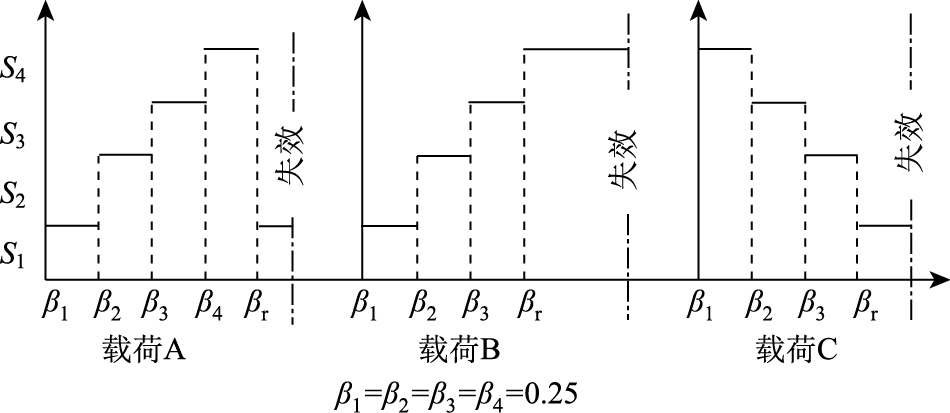
采用文献[24]中Aluminum alloy材料的四级与五级应力加载试验数据。不同应力的疲劳寿命和每级施加的循环次数见表 8。拟合得到S-N曲线的系数K=855;b=0.087 3。载荷的加载顺序如图 2所示。对Miner,Manson,Subramanyan,Hashin及新模型的疲劳累积寿命和损伤进行预测结果如表 9所示,并与试验结果进行对比表明,5种模型的相对误差最大值分别为26.58%,8.57%,34.17%,32.95%及9.65%,其中Subramanyan与Hashin模型在载荷B组中预测的疲劳累积损伤超过了1.5,疲劳损伤/寿命的预测误差较大。
| 应力等级 | S1 | S2 | S3 | S4 |
| 应力幅值/MPa | 260 | 275 | 290 | 305 |
| 每级加载次数 | 210 000 | 110 500 | 60 000 | 33 750 |
| 寿命均值/次 | 840 000 | 442 000 | 240 000 | 135 000 |
|
| 图 2 载荷A、B及C的加载顺序 Fig. 2 Loading sequence of stages loading A, B and C |
| |
| 载荷/加载次序 | 荷载A, S1-S2-S3-S4-S1 | 荷载 B, S1-S2-S3-S4 | 荷载C, S4-S3-S2-S1 | |||||||||
| 评价指标 | 总寿命/次 | 疲劳累积损伤 | E/% | 总寿命/次 | 累积疲劳损伤 | E/% | 总寿命/次 | 疲劳累积损伤 | E/% | |||
| 试验结果 | 531 000 | 1.139 | — | 434 500 | 1.151 | — | 236 500 | 0.790 | — | |||
| Miner模型 | 414 250 | 1.000 | 12.20 | 414 250 | 1.000 | 13.12 | 414 250 | 1.000 | 26.58 | |||
| Manson模型 | 522 670 | 1.129 | 0.87 | 447 940 | 1.250 | 8.57 | 266 780 | 0.824 | 4.36 | |||
| Subramanyan模型 | 465 610 | 1.061 | 6.84 | 487 720 | 1.544 | 34.17 | 200 030 | 0.745 | 5.70 | |||
| Hashin模型 | 467 740 | 1.064 | 6.61 | 485 840 | 1.530 | 32.95 | 202 040 | 0.747 | 5.40 | |||
| 新模型 | 453 310 | 1.047 | 1.73 | 432 610 | 1.137 | 5.22 | 301 800 | 0.866 | 9.65 | |||
4 结果对比 4.1 疲劳累积寿命/损伤的对比
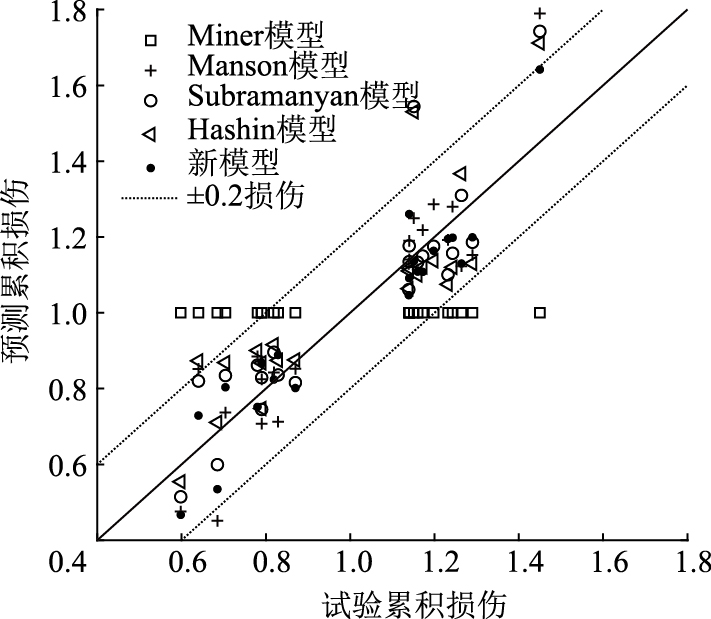
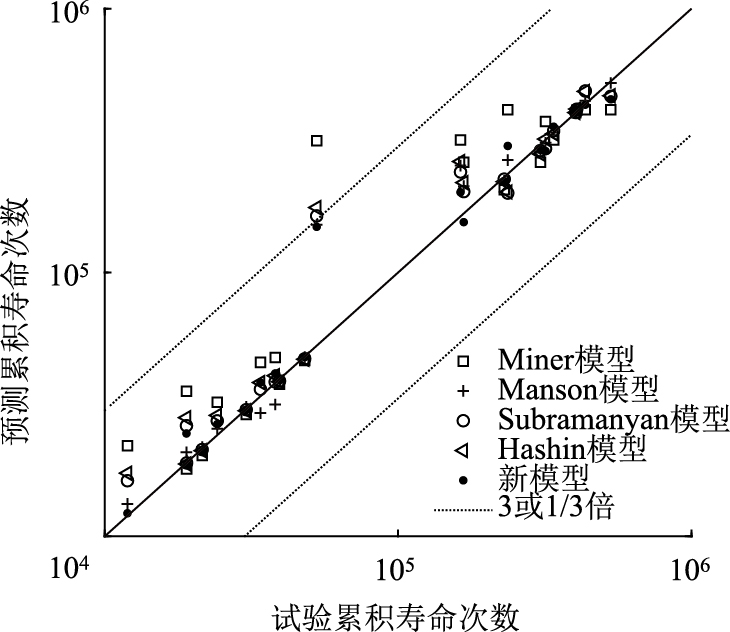
通过汇总两级至五级算例,得到试验疲劳累积损伤与各模型疲劳累积损伤的对比,如图 3所示。试验累积寿命与各模型疲劳累积寿命的对比,如图 4所示。
|
| 图 3 各级应力加载下不同模型的疲劳累积损伤对比 Fig. 3 Comparison of cumulative damage with different models under multi-stages stress loading |
| |
|
| 图 4 各级应力加载下不同模型的疲劳累积寿命对比 Fig. 4 Comparison of cumulative life with different models under multi-stages stress loading |
| |
由图 3可知,若以疲劳累积损伤的±0.2作为区间分界线,Miner模型预测有大量结果落在区间之外,其余4种模型多数落在区间之内,有个别结果落在区间之外,且4种模型中新模型的最远距离均低于其他3种模型。
由图 4可知,若以疲劳累积寿命的3或1/3倍作为区间分界线,Miner模型预测有多个结果落在区间之外,新模型均落在该寿命区间之内,其余3种模型有个别落在区间外。
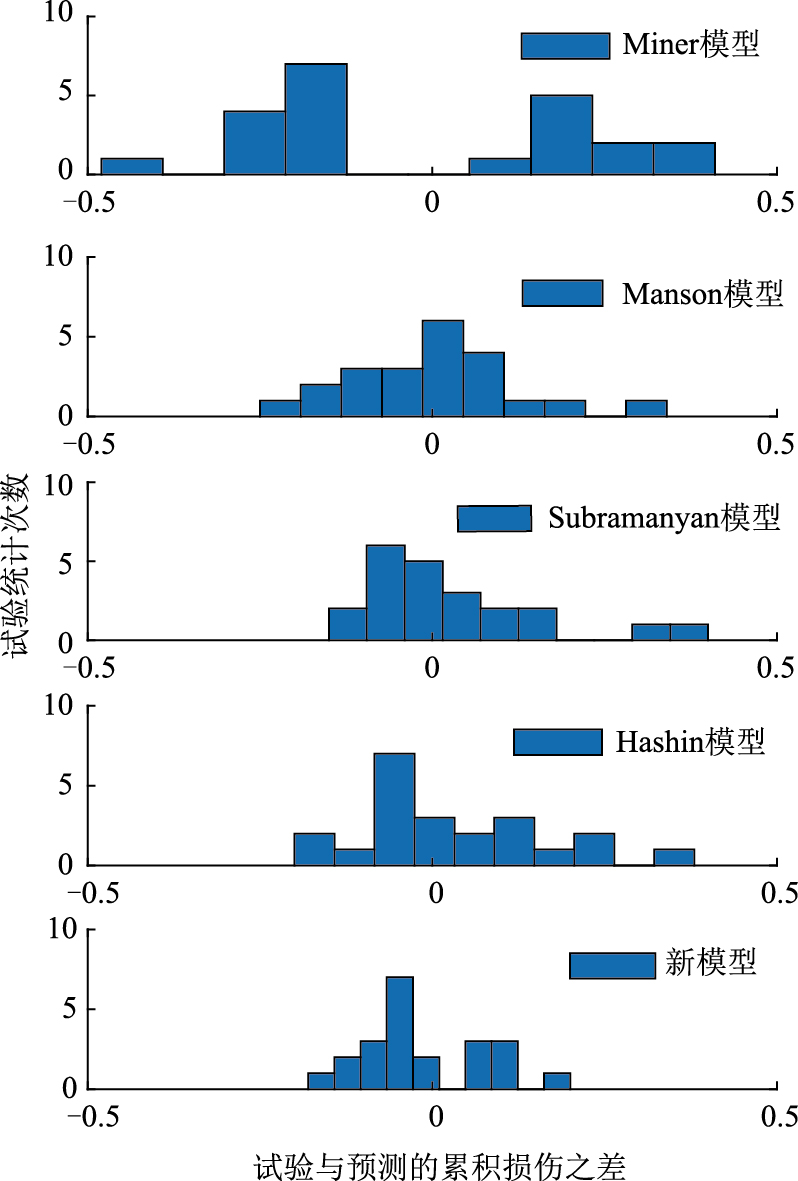
4.2 疲劳损伤预测误差的统计分别计算了试验疲劳累积损伤与各模型预测疲劳累积损伤之差的分布,如图 5所示。从图 5可知,新模型预测结果的误差区间最小,均优于Miner,Manson,Subramanyan及Hashin模型。
|
| 图 5 试验疲劳累积损伤与各模型预测疲劳累积损伤之差的分布 Fig. 5 Distribution of differences between test fatigue cumulative damage and model-predicted fatigue cumulative damage |
| |
综上,通过与二级至五级应力加载试验结果的对比可知,新模型的疲劳寿命/损伤预测精度优于Miner,Manson,Subramanyan及Hashin模型。
5 结论本研究提出一种基于相邻载荷作用等效转化关系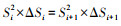
将二级至五级应力试验数据用于各模型预测验证,得到的Miner模型,Manson模型,Subramanyan模型及Hashin模型的试验疲劳累积损伤与各模型预测疲劳累积损伤之差的标准差分别为0.25,0.12,0.13,0.14及0.09,新模型对应的标准差最小,也验证了该模型具有较高的疲劳寿命/损伤的预测精度,具有一定的工程应用价值。
| [1] |
LIU J, WANG Y, LI W. Simplified Fatigue Durability Assessment for Rear Suspension Structure[J].
International Journal of Automotive Technology, 2010, 11(5): 659-664.
DOI:10.1007/s12239-010-0078-1 |
| [2] |
刘富佳, 杨小娟, 许书权, 等. 基于维修大数据的营运客车安全部件可靠性分析[J]. 公路交通科技, 2023, 40(11): 229-236. LIU Fu-jia, YANG Xiao-juan, XU Shu-quan, et al. An Analysis on Reliability of Commercial Bus Safety Parts Based on Maintenance Big Data[J]. Journal of Highway and Transportation Research and Development, 2023, 40(11): 229-236. |
| [3] |
于丰菘, 周洪福, 姜磊, 等. 钢桁桥节点构造演变及其疲劳评估热点应力法[J]. 公路交通科技, 2023, 40(6): 126-139. YU Feng-song, ZHOU Hong-fu, JIANG Lei, et al. Joint Structure Evolution and a Hot Stress Method for Assessing Fatigue of Steel Truss Bridge[J]. Journal of Highway and Transportation Research and Development, 2023, 40(6): 126-139. |
| [4] |
CHEN H, YANG F, WU Z, et al. A Nonlinear Fatigue Damage Accumulation Model under Variable Amplitude Loading Considering the Loading Sequence Effect[J].
International Journal of Fatigue, 2023, 177: 107945.
DOI:10.1016/j.ijfatigue.2023.107945 |
| [5] |
WEI H Y, LIU Y M. An Energy-based Model to Assess Multiaxial Fatigue Damage under Tension-torsion and Tension-tension Loadings[J].
International Journal of Fatigue, 2020, 141: 105858.
DOI:10.1016/j.ijfatigue.2020.105858 |
| [6] |
朱洪洲, 范世平, 卢章天, 等. 基于耗散能的老化沥青疲劳寿命预估模型分析[J]. 公路交通科技, 2019, 36(9): 8-13, 30. ZHU Hong-zhou, FAN Shi-ping, LU Zhang-tian, et al. Analysis on Fatigue Life Predicted Model of Aged Asphalt Based on Dissipation Energy[J]. Journal of Highway and Transportation Research and Development, 2019, 36(9): 8-13, 30. |
| [7] |
GUO C, LI J. A Fast Fatigue Life Estimation Method for Concrete Based on the Energy Dissipation Approach[J].
International Journal of Fatigue, 2023, 177: 107948.
DOI:10.1016/j.ijfatigue.2023.107948 |
| [8] |
WU B, WEI Q, YANG Y, et al. A New Fatigue Damage Prediction Model Applicable to Multi-slope S-N Curves[J].
Applied Ocean Research, 2024, 149: 104050.
DOI:10.1016/j.apor.2024.104050 |
| [9] |
ZHAO G W, LIU Y T, YE N H. An Improved Fatigue Accumulation Damage Model Based on Load Interaction and Strength Degradation[J].
International Journal of Fatigue, 2022, 156: 106636.
DOI:10.1016/j.ijfatigue.2021.106636 |
| [10] |
ZHANG L. A New Fatigue Cumulative Damage Model based on Material Parameters and Stress Interaction[J].
International Journal of Fatigue, 2024, 179: 108035.
DOI:10.1016/j.ijfatigue.2023.108035 |
| [11] |
张禄, 纪威, 周炜, 等. 基于强度退化的疲劳累积损伤模型[J]. 农业工程学报, 2015, 31(增1): 47-52. ZHANG Lu, JI Wei, ZHOU Wei, et al. Fatigue Cumulative Damage Models Based on Strength Degradation[J]. Transactions of the Chinese Society of Agricultural Engineering, 2015, 31(S1): 47-52. |
| [12] |
GHOLAMI P, FARSI M A, KOUCHAKZADEH M A. Stochastic Fatigue Life Prediction of Fiber-reinforced Laminated Composites by Continuum Damage Mechanics-based Damage Plastic Model[J].
International Journal of Fatigue, 2021, 152: 106456.
DOI:10.1016/j.ijfatigue.2021.106456 |
| [13] |
ARAUJO L M, FERREIRA G V, NEVES R S, et al. Fatigue Analysis for the Aluminum Alloy 7050-T7451 Performed by a Two Scale Continuum Damage Mechanics Model[J].
Theoretical and Applied Fracture Mechanics, 2020, 105: 102439.
DOI:10.1016/j.tafmec.2019.102439 |
| [14] |
MANSON S S, HALFORD G R. Practical Implementation of the Double Linear Damage Rule and Damage Curve Approach for Treating Cumulative Fatigue Damage[J].
International Journal of Fracture, 1981, 17(2): 169-192.
DOI:10.1007/BF00053519 |
| [15] |
MANSON S S, FRECHE J C, ENSIGN C R. Application of a Double Linear Damage Rule to Cumulative Fatigue[J].
Fatigue Crack Propagation, 1967, 415: 384-412.
|
| [16] |
GAO K, LIU G, TANG W. An Improved Manson-halford Model for Multi-level Nonlinear Fatigue Life Prediction[J].
International Journal of Fatigue, 2021, 151: 106393.
DOI:10.1016/j.ijfatigue.2021.106393 |
| [17] |
SABRAMANYA S. A Cumulative Damage Rule Based on the Knee Point of the S-N Curve[J].
Journal of Engineering Mechanics and Technology, 1976, 98(4): 316-321.
|
| [18] |
HASHIN Z, ROTEM A. A Cumulative Damage Theory of Fatigue Failure[J].
Materials Science & Engineering, 1978, 34(2): 147-160.
|
| [19] |
SHANG D G, YAO W X. A Nonlinear Damage Cumulative Model for Uniaxial Fatigue[J].
International Journal of Fatigue, 1999, 21(2): 187-194.
DOI:10.1016/S0142-1123(98)00069-3 |
| [20] |
YAO W X, HIMMEL N. A New Cumulative Fatigue Damage Model for Fibre-reinforced Plastics[J].
Composites Science and Technology, 2000, 60(1): 59-64.
DOI:10.1016/S0266-3538(99)00100-1 |
| [21] |
HUANG H Z, ZHU S P, WANG Z L, et al. Nonlinear Fatigue Damage Cumulative Rule based on Strength Degradation and Its Application to Fatigue Life Reliability Analysis[J].
Journal of Basic Science and Engineering, 2011, 19(2): 323-334.
|
| [22] |
WU F Q, YAO W X. A Fatigue Damage Model of Composite Materials[J].
International Journal of Fatigue, 2010, 32(1): 134-138.
DOI:10.1016/j.ijfatigue.2009.02.027 |
| [23] |
DJEBLI A, AID A, BENDOUBA M. A Non-line Energy Model of Fatigue Damage Accumulation and its Verification for Al-2024 Aluminum Alloy[J].
International Journal of Non-linear Mechanics, 2013, 51(1): 145-151.
|
| [24] |
MESMACQUE G, GARCIA S, AMROUCHE A. Sequential Law in Multiaxial Fatigue: A New Damage Indicator[J].
International Journal of Fatigue, 2005, 27(4): 461-467.
DOI:10.1016/j.ijfatigue.2004.08.005 |
| [25] |
WEIBULL W. Fatigue Testing and Analysis of Results[M].
Oxford: Pergamon Press, 1961.
|
| [26] |
PAVLOU D G. A Phenomenological Fatigue Damage Accumulation Rule based on Hardness Increasing for the 2024-T 42 Aluminum[J].
Engineering Structure, 2002, 24(11): 1363-1368.
DOI:10.1016/S0141-0296(02)00055-X |
| [27] |
方义庆, 胡明敏, 罗艳利. 基于全域损伤测试建立的连续疲劳损伤模型[J]. 机械强度, 2006, 28(4): 582-586. FANG Yi-qing, HU Ming-min, LUO Yan-li. New Continuous Fatigue Damage Model Based on Whole Damage Field Measurement[J]. Journal of Mechanical Strength, 2006, 28(4): 582-586. |
| [28] |
胡明敏, 唐静静, 魏平. 一种S-N曲线移动法的寿命分析模型[J]. 河海大学学报(自然科学版), 2003, 31(1): 60-63. HU Ming-min, TANG Jing-jing, WEI Ping. S-N Curve Movement-based Life Analytical Model[J]. Journal of Hohai University (Natural Sciences), 2003, 31(1): 60-63. |