 2023, Vol. 40
扩展功能

文章信息
- 袁松, 王峰, 张路华.
- YUAN Song, WANG Feng, ZHANG Lu-hua
- 高海拔单洞双向公路隧道横通道火灾烟气控制临界风速研究
- Study on Critical Wind Velocity for Smoke Control in Cross-passage of High-altitude Single-tube Two-way Road Tunnel
- 公路交通科技, 2023, 40(5): 132-137
- Journal of Highway and Transportation Research and Denelopment, 2023, 40(5): 132-137
- 10.3969/j.issn.1002-0268.2023.05.018
-
文章历史
- 收稿日期: 2021-04-15


 ,
, 2. 西南交通大学 交通隧道工程教育部重点实验室, 四川 成都 610031;
3. 四川省交通勘察设计研究院有限公司, 四川 成都 610017
2. Key Laboratory of Transport Tunnel Engineering of Ministry of Education, Southwest Jiaotong University, Chengdu Sichuan 610031, China;
3. Sichuan Communications Surveying & Design Institute Co., Ltd., Chengdu Sichuan 610017, China
随着西部山区公路隧道建设的发展,一些高海拔地区单洞双向交通公路隧道逐渐增多,表 1给出了我国部分高海拔特长单洞双向公路隧道[1-3]。从表中看出,高海拔单洞双向公路隧道多采用主隧道+平行导坑的结构型式,通风方式以平导压入式纵向通风为主,主隧道与平行导坑之间的横通道作为主要的应急逃生救援通道。
| 隧道名称 | 省份 | 长度/m | 海拔/m | 通风方式 | 横通道布置 |
| 雀儿山隧道 | 四川 | 7 079 | 4 380 | 平导压入式纵向通风 | 9处车行横通道 |
| 高尔寺隧道 | 四川 | 5 682 | 3 950 | 平导压入式纵向通风 | 5处车行横通道 |
| 巴朗山隧道 | 四川 | 7 954 | 3 850 | 平导压入式纵向通风 | 9处车行横通道 |
| 鹧鸪山隧道 | 四川 | 4 423 | 3 350 | 平导压入式纵向通风 | 9处车行横通道 |
| 二郎山隧道 | 四川 | 4 176 | 2 200 | 平导压入式纵向通风 | 14处车行横通道 |
当单洞双向隧道发生火灾,火源附近上下游被困车辆与人员均须通过横通道疏散至平导内。此时,如果火灾烟气经横通道进入平导,将给人员安全疏散带来极大危害[4-5]。如何保证横通道内无烟是防灾通风系统设计的重中之重。由于高海拔地区环境特征,隧道火灾燃烧及烟气扩散特性较平原地区均发生显著变化,使得高海拔单洞双向隧道防灾通风系统设计较平原隧道相比具有明显的不确定性[6]。因此,有必要针对高海拔公路隧道横通道火灾控制风速开展研究。
目前,国内外学者对隧道横通道临界风速做了少量研究。Tarada[7-8]基于临界Froude数提出了横通道临界风速计算思路,但其并未提出具体的临界风速计算方法;李颖臻等[9-11]建立1/20的隧道火灾试验模型,研究横通道高度、火源热释放率、隧道风速等因素对横通道临界风速的影响,提出了隧道横通道临界风速计算方法;姜学鹏等[12]依据π定理和相似理论,提出横通道临界风速的无量纲计算公式。严磊[13]利用FDS软件对影响双洞公路隧道间横通道临界风速的相关因素开展深入研究。Zhou[14]建立了1∶20缩尺模型,研究了火源位置、热释放热率、半横向排烟速度,防护门尺寸以及隧道堵塞率对横通道临界风速的影响,提出了半横向通风铁路隧道救援站横通道控制风速的计算结果。以上研究对于了解和掌握低海拔隧道横通道火灾烟气控制风速提供了重要的参考价值。但是,上述研究均以低海拔地区隧道人行横通道为研究对象,且多为铁路隧道,而对高海拔单洞双向公路隧道横通道临界风速的研究还相当匮乏。
为了解和掌握高海拔单洞双向公路隧道横通道烟气控制方法,本研究采用数值计算方法和量纲分析对不同火源横向位置和不同海拔高度隧道横通道临界风速开展深入研究,提出了高海拔公路隧道横通道临界风速计算方法,为高原公路隧道防灾工程设计提供依据。
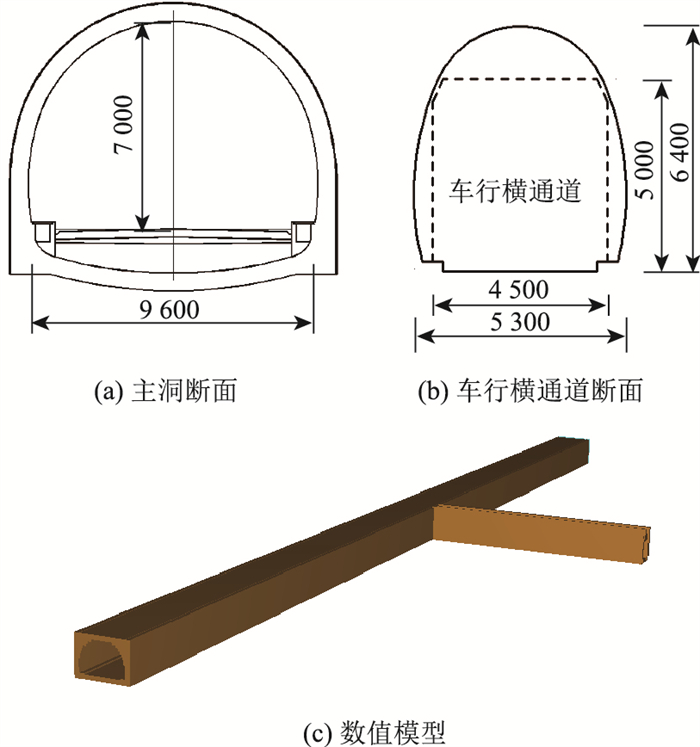
1 数值模拟 1.1 模型及参数为研究高海拔单洞双向公路隧道火灾下横通道控制风速,本研究建立了主洞和车行横通道模型,主洞长300 m,断面宽9.6 m、高7 m;车行横通道位于隧道模型中部,长60 m,断面宽5.3 m、高6.4 m,如图 1所示。
|
| 图 1 隧道断面与计算模型(单位:mm) Fig. 1 Tunnel cross-section and simulation model (unit: mm) |
| |
1.2 网格尺寸分析
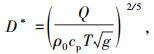
为确定合理的网格尺寸,本研究首先对不同网格进行了计算分析。在隧道火灾计算中,通常采用火源特征直径对网格进行分析[15-16],如式(1)所示:
|
(1) |
式中,D*为火源特征直径;Q为烦热释放率;ρ0为空气密度;cp为空气比热容;T为环境温度;g为重力加速度。
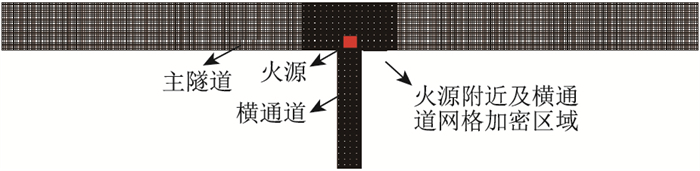
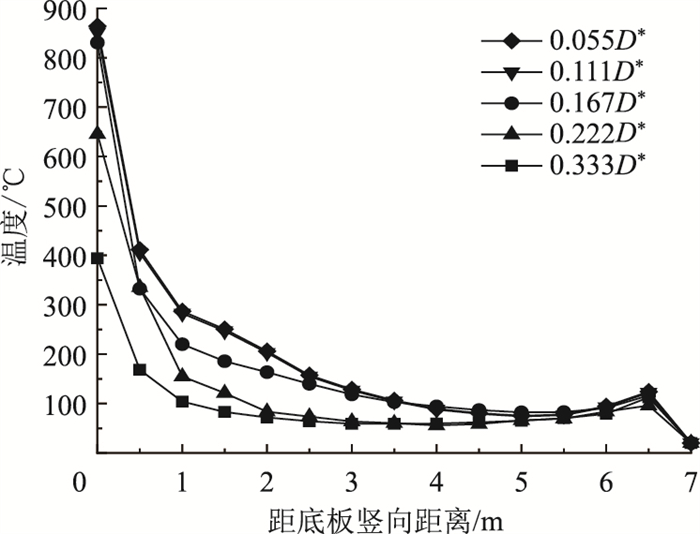
为确定合理的网格尺寸,本研究设计了5种不同网格尺寸工况,如表 2所示。隧道与横通道网格模型如图 2所示。不同网格尺度下隧道火源中心断面竖向温度计算结果如图 3所示。由图 3可见,当加密区网格尺寸为0.111D*时,其温度的竖向分布与网格为0.055D*时计算结果相差较小。随着网格的增大,其计算结果差别均显著增大。因此,本研究计算模型中采用加密区网格尺寸为0.111D*,非加密区网格尺寸为0.222D*。
| 工况 | 火灾规模/ MW | 加密区网格尺寸/m | 与D*关系 | 非加密区网格尺寸/m | 与D*关系 |
| 1 | 3 | 0.500 | 0.333D* | 1.000 | 0.666D* |
| 2 | 3 | 0.333 | 0.222D* | 0.667 | 0.444D* |
| 3 | 3 | 0.250 | 0.167D* | 0.500 | 0.333D* |
| 4 | 3 | 0.167 | 0.111D* | 0.333 | 0.222D* |
| 5 | 3 | 0.083 | 0.055D* | 0.167 | 0.111D* |
|
| 图 2 隧道网格 Fig. 2 Tunnel gridding |
| |
|
| 图 3 火源处竖向温度分布 Fig. 3 distribution of vertical temperature at fire source |
| |
1.3 数值模型的验证
本研究首先采用以上数值模型计算方法对文献中的缩尺模型试验工况进行了数值模拟[10]。试验及模拟结果如表 3所示。由表可知数值计算结果与试验结果吻合较好,误差在2.94%~3.68%之间,说明本研究所采用的计算模型是合理的。
| 火源热释放率/KW | 横通道尺寸/mm | 纵向隧道通风速度/ (m·s-1) | Li试验结果/ (m·s-1) | 数值模拟结果/ (m·s-1) | 误差/% |
| 10.5 | 100 | 0.5 | 0.170 | 0.165 | 2.94 |
| 13.5 | 3 | 0.5 | 0.190 | 0.183 | 3.68 |
2 计算结果与分析 2.1 断面横向火源位置对横通道烟气扩散规律的影响
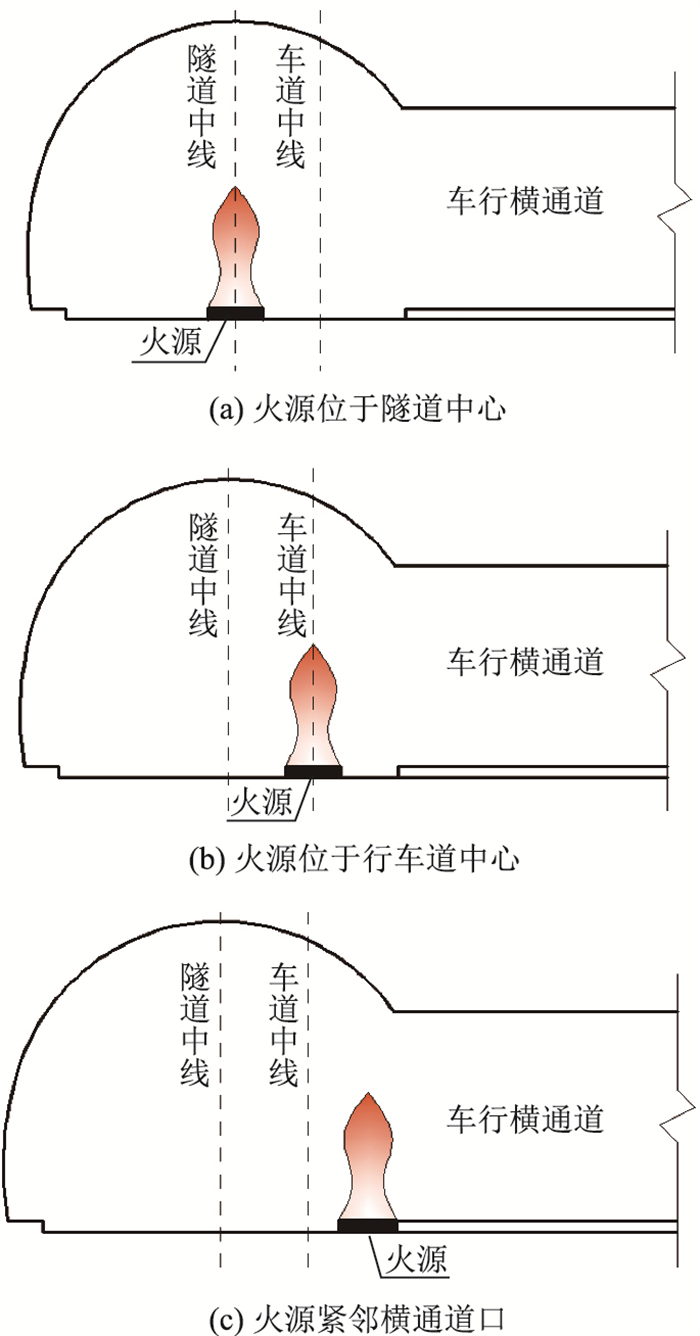
为分析隧道断面横向火源位置对横通道内烟气扩散的影响,确定最不利火源位置。本研究考虑了3种工况,分别为火源位于隧道中心、火源位于行车道中心、以及火源紧邻隧道侧壁横通道口处,如图 4所示。
|
| 图 4 横向火灾位置 Fig. 4 Lateral fire positions |
| |
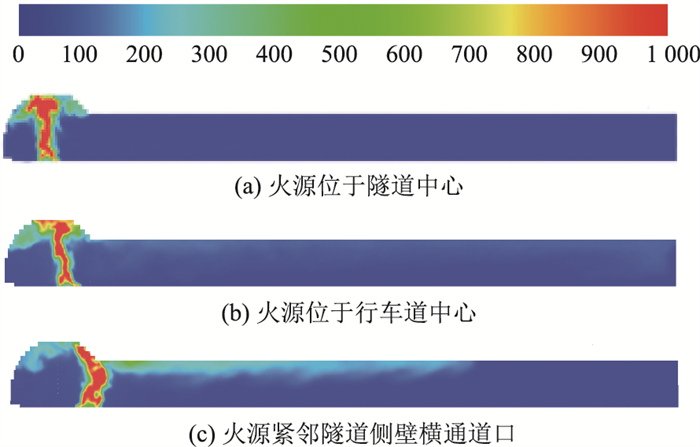
图 5为不同横向位置公路隧道火灾火源处横断面温度分布云图。由图 5可知,当火源位于隧道断面中心时,火灾烟气未进入横通道;当火源位于道路中心时,横通道入口处温度略微增高,说明部分烟气已进入横通道;当火源紧邻隧道横通道口处时,横通道内温度显著升高,说明隧道内烟气已大量扩散至横通道,此位置即为隧道横通道附近火源最不利位横向位置。
|
| 图 5 火源位于不同横向位置时火源所在横断面温度分布(单位:℃) Fig. 5 Distribution of temperatures at cross-section of fire source in different transverse positions(unit: ℃) |
| |
2.2 高海拔公路隧道横通道临界风速
本研究进一步考虑了海拔高度和火灾热释放率的影响,并对不同工况下隧道横通道火灾临界风速进行了计算分析。计算模型中火源均位于隧道侧壁横通道口处,火源设置在路面上,具体工况设置如表 4所示。
| 工况序号 | 海拔高度/m | 大气压强/Pa | 环境温度/℃ | 火源位置 | 火灾规模/MW |
| 1~4 | 0 | 101 325 | 20 | 隧道侧壁横通道口处 | 11.5,20.5,32.3,46.3 |
| 5~8 | 2 000 | 79 832.8 | |||
| 9~12 | 3 000 | 70 566.4 | |||
| 13~16 | 4 000 | 62 190.8 | |||
| 17~20 | 5 000 | 54 639 |
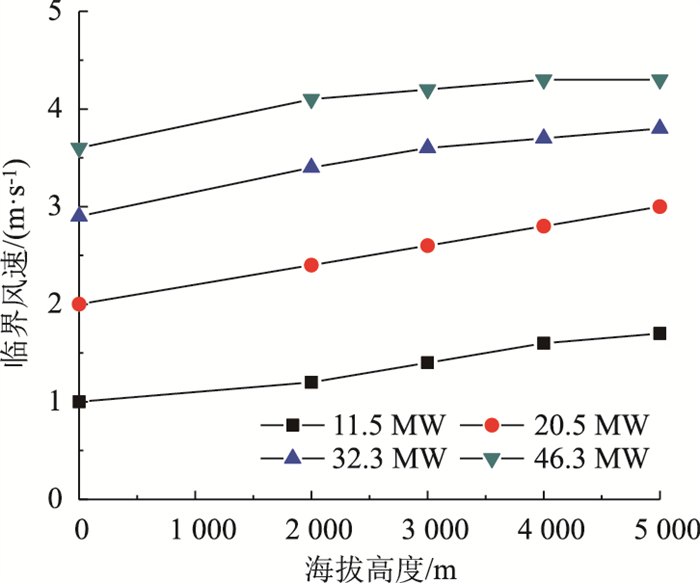
图 6给出了横通道临界风速与不同火灾热释放率和不同海拔高度的变化结果。从图 6可知,横通道临界风速随海拔高度的增加而增加。其主要原因是随着海拔高度的增加火灾高温烟气的热浮升力效应显著增强,横通道内的临界风速也相应提高。
|
| 图 6 横通道临界风速与海拔高度的关系 Fig. 6 Relationship between critical velocity speed in cross- passage and altitude |
| |
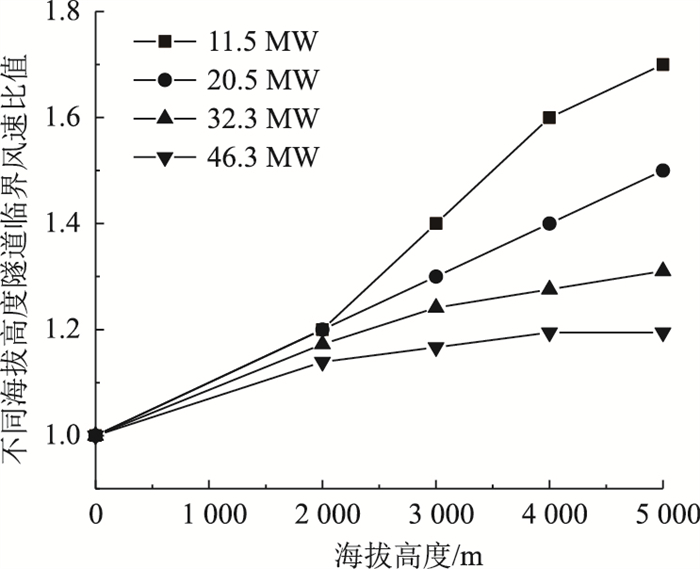
为了解横通道火灾临界风速随海拔升高的变化速率,本研究提出了高海拔隧道横通道与海拔为0 m时隧道横通道临界风速比值,该比值随海拔高度的变化结果如图 7所示。从图 7中可知,海拔2 000 m以下,横通道临界风速比值随海拔高度增加的增长趋势基本一致;当海拔大于2 000 m时,针对较小的火灾热释放率,横通道临界风速比值的增长速率迅速增大。当火灾热释放率分别为11.5 MW和32.3 MW时,海拔5 000 m隧道横通道临界风速较海拔0 m时分别提高了70%和30%。
|
| 图 7 横通道临界风速比值随海拔高度的变化关系 Fig. 7 Relationship between critical wind velocity ratio in cross-passage and altitude |
| |
3 讨论与分析 3.1 量纲分析与横通道内火灾临界风速计算方法的建立
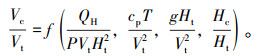
本节主要采用量纲分析方法对高海拔隧道横通道临界风速进行无量纲分析并建立相应的计算方法。影响高海拔隧道横通道临界风速的主要因素包括隧道纵向风速、火灾热释放率、大气压强、空气比热容、空气温度、重力加速度、隧道水利直径、横通道高度等[9-12]。因此,高海拔隧道横通道火灾临界风速如式(2)所示:

|
(2) |
式中,VC为隧道横通道内火灾临界风速;QH为高海拔火灾热释放率,Vt为隧道主洞纵向风速;P为大气压强;Ht隧道水利直径;Hc为横通道高度;Ht,Vt,P,T为基本量。对式(2)进行无量纲处理得:
|
(3) |
简化可得:

|
(4) |
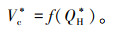
最终,无量纲横通道临界风速如式(5)所示:
|
(5) |
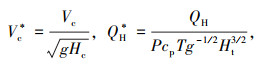
其中:
|
(6) |
式中,Vc*为无量纲隧道横通道内火灾临界风速;QH*为无量纲火灾热释放速率。
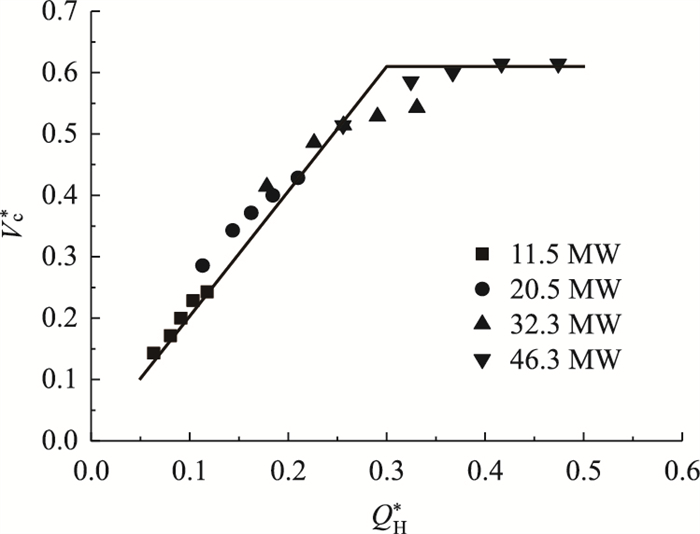
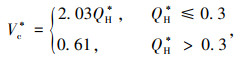
图 8给出了隧道横通道火灾临界风速随火灾热释放率的变化规律。从图 8中可知,当热释放率较小时,临界风速随火灾热释放率呈线性增长;当QH*大于0.3时,临界风速基本不变。
|
| 图 8 横通道内无量纲临界风速与无量纲火灾热释放率的关系 Fig. 8 Relationship between dimensionless critical wind velocity in cross-passage and dimensionless fire heat release rate |
| |
进一步对横通道内临界风速进行分段拟合,得到不同海拔高度隧道横通道内火灾临界风速的计算方法如式(7)所示:
|
(7) |
其中:
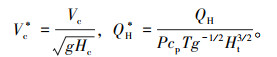
|
(8) |
需要注意的是,式(8)中隧道火灾热释放率QH为高海拔地区隧道火灾热释放率。而目前规范对于隧道火灾热释放率的说明仅针对平原地区[17]。由于海拔高度的升高,隧道火灾热释放率随之降低。因此,为方便高海拔公路隧道横通道火灾临界风速的预测,根据前期对高海拔隧道火灾热释放率的研究成果,高海拔隧道火灾热释放率与海拔高度满足如式(9)所示的关系[18]:

|
(9) |
式中,Q0为成都平原火灾热释放率;H为海拔高度。
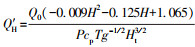
将式(9)代入式(7),可得到不同海拔高度下隧道横通道内火灾临界风速计算方法如式(10)所示:

|
(10) |
式中,
以一座海拔高度为4 000 m的典型单洞双向公路隧道发生火灾为例进行计算分析。
根据规范说明平原地区双向交通隧道火灾最大热释放率Q0为20 MW[17]。因此,将海拔高度和平原地区隧道火灾热释放率代入式(10),可得Q′H和Vc*分别为0.076和0.154,进一步计算可得海拔4 000 m公路隧道横通道临界风速为1.08 m/s。
此时,根据式(10)平原地区双向交通隧道横通道临界风速为1.57 m/s,海拔4 000 m公路隧道横通道临界风速较平原降低了31.4%。
4 结论本研究通过采用三维数值模拟和量纲分析对高海拔单洞双向公路隧道横通道内火灾临界风速开展深入研究,得到如下结论:
(1) 当火源位于隧道侧壁靠近横通道口处时,对于隧道横通道火灾烟气控制最不利,因以此工况确定横通道内火灾临界风速。
(2) 隧道横通道内火灾临界风速随着海拔高度的升高显著增大,火灾规模较小时增长更为显著。火灾热释放率为11.5 MW时,海拔5 000 m隧道横通道临界风速较海拔0 m时提高了70%。
(3) 基于无量纲分析,本研究提出了高海拔单洞双向公路隧道横通道火灾临界风速计算方法。考虑海拔高度对隧道火灾热释放率和横通道临界风速的综合影响,海拔4 000 m公路隧道横通道临界风速较平原降低了31.4%。
| [1] |
蒋琪. 单洞双向公路隧道火灾通风排烟控制研究[D]. 成都: 西南交通大学, 2017. JIANG Qi. Research on Fire Ventilation and Smoke Exhaust Control of Single-hole Two-way Highway Tunnels[D]. Chengdu: Southwest Jiaotong University, 2017. |
| [2] |
陈诗明. 导洞模式下单洞双向公路隧道人员疏散救援研究[D]. 成都: 西南交通大学, 2017. CHEN Shi-ming. Research on Evacuation and Rescue of Single-tube and Two-way Highway Tunnels under Guide Tunnel Mode[D]. Chengdu: Southwest Jiaotong University, 2017. |
| [3] |
严涛. 高海拔单洞双向特长公路隧道通风关键技术研究[D]. 成都: 西南交通大学, 2016. YAN Tao. Research on Key Technology of Ventilation for High Altitude Single-hole Two-way Extra-long Highway Tunnel[D]. Chengdu: Southwest Jiaotong University, 2016. |
| [4] |
宋国森, 胡斌. 特长公路隧道平导通风方案研究及优化[J]. 公路交通科技, 2011, 28(4): 84-90, 95. SONG Guo-sen, HU Bin. Research and Optimization of Parallel Heading Ventilation Scheme for Super-long Highway Tunnel[J]. Journal of Highway and Transportation Research and Development, 2011, 28(4): 84-90, 95. |
| [5] |
王赤心. 多车道高速公路隧道人行横洞疏散安全分析[J]. 公路交通科技, 2015, 32(11): 100-106. WANG Chi-xin. Analysis of Multi-lane Expressway Tunnel Transverse-hole Evacuation Safety[J]. Journal of Highway and Transportation Research and Development, 2015, 32(11): 100-106. |
| [6] |
王峰, 黄玉冰, 朱磊, 等. 超高海拔隧道火灾燃烧与烟气温度现场模型试验研究[J]. 土木工程学报, 2020, 53(3): 114-120. WANG Feng, HUAG Yu-bing, ZHU Lei, et al. Field Model Experimental Study on Fire Combustion and Smoke Temperature in Very-high-altitude Tunnels[J]. Journal of Civil Engineering, 2020, 53(3): 114-120. |
| [7] |
TARADA F. Critical Velocities for Smoke Control in Tunnel Cross-passages[C] // lnternational Conference on Major Tunnel and infrastructure Projects. Taiwan; ITC, 2000: 22-24.
|
| [8] |
TARADA F, BOPP R, NYFELER S, et al. Ventilation and Risk Control of the Young Dong Rail Tunnel in Korea[C] // International Conference on Major Tunnel and Infrastructure Projects. Taipei: ITC, 2000: 22-24.
|
| [9] |
李颖臻, 雷波. 隧道间联络通道临界风速模型[J]. 铁道学报, 2008, 30(3): 87-90. LI Ying-zhen, LEI Bo. Model of Critical Velocity in a Tunnel Cross-passage[J]. Journal of the China Railway Society, 2008, 30(3): 87-90. |
| [10] |
Ll Y Z, LEl B, INGASON H. Theoretical and Experimental Study of Critical Velocity for Smoke Control in a Tunnel Cross-passage[J].
Fire Techology, 2013, 49(2): 435-449.
DOI:10.1007/s10694-010-0170-0 |
| [11] |
李颖臻. 含救援站特长隧道火灾特性及烟气控制研究[D]. 成都: 西南交通大学, 2010. LI Ying-zhen. Study on Fire Characteristics and Smoke Control for Extra-long Tunnel with Rescue Station[D]. Chengdu: Southwest Jiaotong University, 2010. |
| [12] |
姜学鹏, 张剑高, 何超, 等. 铁路隧道横通道临界风速研究[J]. 中国铁道科学, 2017, 38(4): 55-61. JIANG Xue-peng, ZHANG Jian-gao, HE Chao, et al. Study on Critical Wind Velocity of Cross Passage in Railway Tunnel[J]. China Railway Science, 2017, 38(4): 55-61. |
| [13] |
严磊. 双洞公路隧道火灾模式下横通道通风控制研究[D]. 淮南: 安徽理工大学, 2019. YAN Lei. Research on Cross-channel Ventilation Control for Double-hole Highway Tunnel under Fire Mode[D]. Huainan: Anhui University of Science and Technology, 2019. |
| [14] |
ZHOU Y, BI H, WANG H, et al. Critical Velocity in the Transverse Passages of a Railway Tunnel Rescue Station with Semi-transverse Ventilation[J].
Tunnelling and Underground Space Technology, 2019, 92(10): 103064.
|
| [15] |
MCGRATTAN K B, MCDERMOTT R J, WEINSCHENK C G, et al. Fire Dynamics Simulator: User's Guide[M].
6th ed. Gaithersburg: National Institute of Standards and Technology, 2013.
|
| [16] |
胡隆华. 隧道火灾烟气蔓延的热物理特性研究[D]. 合肥: 中国科学技术大学, 2006. HU Long-hua. Studies on Thermal Physics of Smoke Movement in Tunnel Fires[D]. Hefei: University of Science and Technology of China, 2006. |
| [17] |
JTG/T D70/2-02—2014, 公路隧道通风设计细则[S]. JTG/T D70/2-02—2014, Guidelines for Design of Ventilation of Highway Tunnels[S]. |
| [18] |
王峰, 张路华, 袁松, 等. 高海拔公路隧道火灾烟气控制临界风速研究[J]. 中国公路报, 2022, 35(5): 153-160. WANG Feng, ZHANG Lu-hua, YUAN Song, et al. Critical Velocity of Fire Smoke Control in High-altitude Highway Tunnels[J]. China Journal of Highway and Transport, 2022, 35(5): 153-160. |