 2022, Vol. 39
扩展功能

文章信息
- 刘龙龙, 赵尚传, 刘忠凯, 王少鹏, 刘荣欣
- LIU Long-long, ZHAO Shang-chuan, LIU Zhong-kai, WANG Shao-peng, LIU Rong-xin
- 高石粉含量机制砂混凝土匀质性的试验研究
- Experimental Study on Homogeneity of Machine-made Sand Concrete with High Stone Powder Content
- 公路交通科技, 2022, 39(8): 127-133
- Journal of Highway and Transportation Research and Denelopment, 2022, 39(8): 127-133
- 10.3969/j.issn.1002-0268.2022.08.017
-
文章历史
- 收稿日期: 2022-04-08


2. 中海建筑有限公司, 广东 深圳 518057
2. China Overseas Construction Co., Ltd., Shenzhen Guangdong 518057, China
和河砂对比,机制砂石粉含量高,粒型差,含泥量不稳定,不仅会影响机制砂混凝土的工作性能,还会影响混凝土的抗裂能力以及力学性能,从而降低机制砂混凝土的耐久性[1-3]。为保障混凝土的耐久性,改善其匀质性,国内外研究人员提出了不同的测试方法[4-9]。Dhaheer[10]采用光滑粒子流体动力学的方法模拟了骨料在混凝土J形环试验中混凝土的流动;张守祺[11]采用电阻率区间稳定法量化了混凝土浇注的密实度和均匀度;吴义林[12]采用显微硬度法评价了水灰比和粉煤灰掺量对混凝土匀质性的影响。然而目前的匀质性评价方法主要针对混凝土的搅拌和浇注过程[13-14],较少研究成型后混凝土的匀质性,尤其是机制砂粒径级配、水胶比、石粉含量等因素对匀质性的影响[15-17]。
针对上述问题,本研究对浇注成型后的试件切片进行了二值化处理,并利用Image-Pro Plus软件读取切片骨料颗粒数量和面积,根据骨料颗粒数量和面积占切片的比重,量化了不同配合比机制砂混凝土的匀质性,分析了机制砂混凝土水胶比、石粉含量以及骨料最大粒径对匀质性的影响,为进一步提升机制砂混凝土的匀质性提供了理论依据。
1 原材料及试验方案 1.1 原材料选用P·O 42.5级硅酸盐水泥,强度等级分别为C30,C40,C50;I级粉煤灰;高性能聚羧酸减水剂(缓凝型);机制砂的石粉含量为10.9%,粗骨料按照最大密实度比例分配,粗、细骨料均为石灰岩。粗骨料粒径分为5~10 mm,10~19 mm,19~31.5 mm这3档。
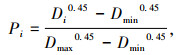
1.2 配合比设计设定水胶比为0.31,0.36,0.45,共3组机制砂混凝土配合比,保持胶凝材料用量和水胶比不变,粗、细骨料比例可按照最大密实度理论[18]分配,见式(1):
|
(1) |
式中,Pi为集料颗粒的通过率;Di为当前粒径;Dmax为最大粒径;Dmin为定义的最小粒径,此处取最小粒径为0.075 mm,即D0.075。
已知机制砂中石粉含量为10.9%,A30-1,A40-1,A50-1是原混凝土的配合比,A30,A40,A50混凝土配合比中粗、细集料的用量可由式(1)确定,具体见表 1。
| 设计等级 | 编号 | 水胶比 | 砂率/% | 原材料种类及用量/(kg·m-3) | ||||||
| 水泥 | 粉煤灰 | 机制砂 | 粗骨料/mm | 水 | ||||||
| 5~10 | 10~19 | 19~31.5 | ||||||||
| C30 | A30 | 0.45 | 41 | 290 | 73 | 780 | 301 | 411 | 392 | 164 |
| A30-1 | 0.45 | 49 | 290 | 73 | 931 | 194 | 484 | 291 | 164 | |
| C40 | A40 | 0.36 | 42 | 345 | 86 | 762 | 294 | 402 | 363 | 155 |
| A40-1 | 0.36 | 46 | 345 | 86 | 869 | 204 | 510 | 306 | 155 | |
| C50 | A50 | 0.31 | 45 | 436 | 48 | 818 | 316 | 691 | — | 150 |
| A50-1 | 0.31 | 43 | 436 | 48 | 802 | 426 | 638 | — | 150 | |
1.3 试验方案 1.3.1 混凝土切片二值化处理
混凝土试件截面为150 mm×150 mm,在标准养护室养护28 d,切片前24 h放置在干燥处晾干,然后采用岩石切割机沿试件纵向切开,并且保证混凝土切片表面平滑。由于骨料区域和浆体区域的颜色不同,运用Image-Pro Plus软件直接读取切片骨料数量和面积时,误差较大,故先采用MATLAB软件进行二值化,采用自行编制程序,运用大津法读取混凝土切片的图片,进行二值化,保存为.jpg格式,以便于Image-Pro Plus软件读取骨料区域和浆体区域的面积。
1.3.2 匀质性评价方法切割完试件后,利用MATLAB软件对混凝土试件切片图像进行二值化处理。将处理后的二值化照片用Photoshop软件将混凝土切片划分为3×3等面积区域,然后借助Image-Pro Plus软件,获取试件切片每个区域内粗骨料颗粒的个数和面积[19]。
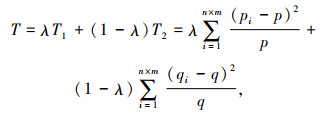
为了获取切片中骨料颗粒数量和面积对匀质性的影响,将骨料的数量和面积作为参数,匀质性评估模型可表示为:
|
(2) |
式中,
第i个区域骨料颗粒的面积比pi可以表示为:

|
(3) |
式中,s为粗骨料颗粒的期望面积;si为粗骨料颗粒的面积。
骨料颗粒面积比的期望值p表示为:

|
(4) |
骨料颗粒数量的期望值q表示为:

|
(5) |
根据试验实测结果,将式(3)~(5)代入式(2),即可得到混凝土试件匀质性计算结果。由于T1和T2分别统计的是切片中骨料面积比和骨料数量的变异程度,计算结果绝对值越小,说明试件的匀质性越好。
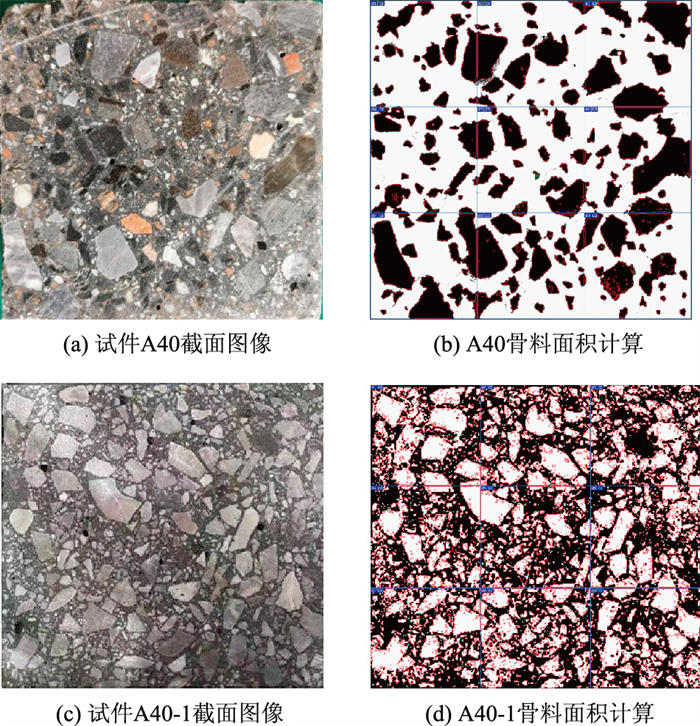
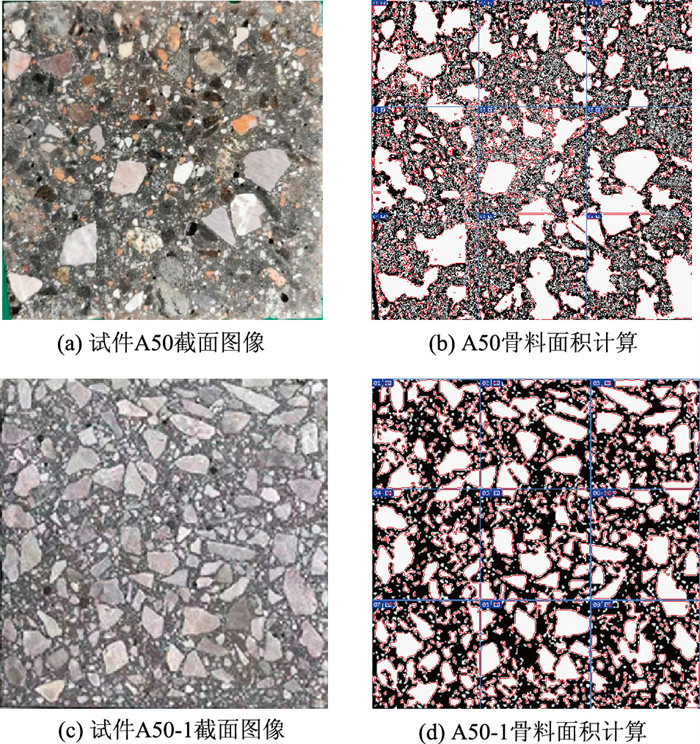
2 试验结果及讨论 2.1 试验结果图 1~图 3分别是不同配合比A30和A30-1,A40和A40-1,A50和A50-1试件切片和二值化图片对比,利用Image-Pro Plus软件读取二值化后切片的骨料数量和面积,见表 2~表 7,然后将读取的数据代入式(2),计算A30和A30-1,A40和A40-1,A50和A50-1混凝土试件的匀质性指标,然后进行对比分析。

|
| 图 1 强度等级C30混凝土切片 Fig. 1 Slice of concrete with strength grade C30 |
| |
|
| 图 2 强度等级C40混凝土切片 Fig. 2 Slice of concrete with strength C40 |
| |
|
| 图 3 强度等级C50混凝土切片 Fig. 3 Slice of concrete with strength grade C50 |
| |
| 序号 | 骨料面积 | 最小值 | 最大值 | 平均值 | 标准差 | 数量 |
| 1 | 996.8 | 1.3 | 329.1 | 41.5 | 91.2 | 18 |
| 2 | 887.2 | 1.4 | 288.3 | 44.4 | 81.3 | 15 |
| 3 | 971.6 | 1.4 | 751.2 | 69.4 | 189.7 | 14 |
| 4 | 1 251.2 | 1.3 | 630.3 | 125.1 | 221.1 | 10 |
| 5 | 1 003.0 | 1.4 | 291.9 | 77.2 | 94.5 | 13 |
| 6 | 931.9 | 1.4 | 467.9 | 51.8 | 108.2 | 18 |
| 7 | 1 035.2 | 1.4 | 971.4 | 166.9 | 311.8 | 16 |
| 8 | 1 058.5 | 1.4 | 535.6 | 71.5 | 136.7 | 17 |
| 9 | 1 067.7 | 1.3 | 380.1 | 46.4 | 87.9 | 17 |
| 合计 | 9 203.1 | 138 |
| 序号 | 骨料面积 | 最小值 | 最大值 | 平均值 | 标准差 | 数量 |
| 1 | 936.7 | 5.3 | 799.9 | 117.1 | 259.7 | 8 |
| 2 | 1 235.8 | 4.1 | 513.6 | 49.4 | 108.8 | 25 |
| 3 | 1 113.6 | 4.1 | 302.4 | 42.8 | 68 | 26 |
| 4 | 1 361.6 | 4.8 | 694.4 | 68.1 | 164.8 | 20 |
| 5 | 1 063.8 | 4.0 | 368.9 | 53.2 | 85.0 | 20 |
| 6 | 1 042.0 | 4.2 | 387.2 | 37.2 | 77.0 | 28 |
| 7 | 1 216.8 | 4.0 | 954.4 | 101.4 | 258.8 | 12 |
| 8 | 1 154.40 | 4 | 629.6 | 64.1 | 143.8 | 18 |
| 9 | 1 043.2 | 3.9 | 214.4 | 32.6 | 48.2 | 32 |
| 合计 | 10 167.9 | — | — | — | — | 189 |
| 序号 | 骨料面积 | 最小值 | 最大值 | 平均值 | 标准差 | 数量 |
| 1 | 701.2 | 1.1 | 174.4 | 27.0 | 44.0 | 26 |
| 2 | 843.5 | 1.1 | 215.6 | 17.6 | 43.6 | 48 |
| 3 | 1 014.9 | 1.1 | 351.7 | 72.5 | 103.8 | 34 |
| 4 | 766.8 | 1.0 | 132.7 | 17.4 | 33.8 | 44 |
| 5 | 862.1 | 1.0 | 245.9 | 22.7 | 49.2 | 38 |
| 6 | 98.7 | 1.0 | 497.3 | 38.1 | 96.9 | 27 |
| 7 | 828.9 | 1.0 | 412.5 | 36.4 | 91.0 | 31 |
| 8 | 932.2 | 1.0 | 241.4 | 23.9 | 47.5 | 39 |
| 9 | 855.1 | 1.0 | 195.3 | 21.4 | 50.8 | 40 |
| 合计 | 8 133.4 | — | — | — | — | 327 |
| 序号 | 骨料面积 | 最小值 | 最大值 | 平均值 | 标准差 | 数量 |
| 1 | 1 256.1 | 2.2 | 542.6 | 52.3 | 132.8 | 24 |
| 2 | 1 181.2 | 2.3 | 212.7 | 24.1 | 39.6 | 49 |
| 3 | 1 010.9 | 2.2 | 524.3 | 24.7 | 80.6 | 41 |
| 4 | 956.2 | 2.4 | 177.3 | 19.9 | 35.1 | 48 |
| 5 | 914.7 | 2.3 | 159.0 | 15.0 | 25.0 | 61 |
| 6 | 1 193.1 | 2.3 | 288.4 | 30.6 | 63.1 | 39 |
| 7 | 1 053.4 | 2.2 | 275.8 | 28.5 | 61.0 | 37 |
| 8 | 1 125.7 | 2.2 | 342.3 | 28.1 | 57.6 | 40 |
| 9 | 981.1 | 2.4 | 217.0 | 23.4 | 44.8 | 42 |
| 合计 | 9 672.4 | — | — | — | — | 381 |
| 序号 | 面积 | 最小值 | 最大值 | 平均值 | 标准差 | 数量 |
| 1 | 1 250.4 | 1.3 | 455.7 | 7.7 | 41.9 | 18 |
| 2 | 1 123.4 | 1.3 | 165.1 | 3.7 | 13.9 | 30 |
| 3 | 1 285.2 | 1.3 | 161.0 | 3.3 | 12.3 | 32 |
| 4 | 1 241.9 | 1.3 | 267.8 | 4.9 | 20.2 | 25 |
| 5 | 1 388.1 | 1.3 | 416.2 | 5.2 | 33.3 | 26 |
| 6 | 1 314.5 | 1.3 | 655.9 | 5.5 | 43.9 | 23 |
| 7 | 1 244.9 | 1.3 | 624.6 | 4.3 | 37.1 | 29 |
| 8 | 1 322.6 | 1.3 | 311.4 | 5.2 | 28.7 | 25 |
| 9 | 1 369.4 | 1.3 | 539.2 | 5.5 | 37.4 | 24 |
| 合计 | 11 540.4 | — | — | — | — | 232 |
| 序号 | 面积 | 最小值 | 最大值 | 平均值 | 标准差 | 数量 |
| 1 | 1 289.9 | 2.7 | 399.0 | 35.8 | 74.0 | 36 |
| 2 | 1 190.6 | 2.7 | 359.2 | 32.2 | 69.6 | 37 |
| 3 | 1 287.6 | 2.7 | 179.6 | 32.2 | 43.4 | 40 |
| 4 | 1 126.0 | 2.8 | 271.7 | 26.2 | 50.2 | 43 |
| 5 | 1 144.5 | 2.5 | 231 | 23.8 | 38.9 | 48 |
| 6 | 1 246.6 | 2.8 | 238.7 | 34.6 | 53.4 | 36 |
| 7 | 1 152.4 | 2.7 | 219.2 | 26.8 | 47.7 | 43 |
| 8 | 1 108.6 | 2.7 | 259.2 | 32.6 | 57.0 | 34 |
| 9 | 1 022.1 | 2.7 | 282.1 | 20.4 | 44.4 | 50 |
| 合计 | 10 568.3 | — | — | — | — | 367 |
对比试件A30和A30-1,混凝土试件的骨料面积分别为9 203.1 mm2和10 167.9 mm2,骨料颗粒的数量分别为138和189;混凝土试件A40和A40-1的骨料面积分别为8 133.4 mm2和9 672.4 mm2,骨料颗粒的数量分别为327和381;混凝土试件A50和A50-1的骨料面积分别为11 540.4 mm2和10 568.3 mm2,骨料颗粒的数量分别为232和367。A30和A40混凝土试件的骨料颗粒数量和骨料面积均小于A30-1和A40-1。改变骨料的最大粒径后,A50混凝土试件的骨料颗粒数量小于A50-1,A50骨料的总面积大于A50-1,说明机制砂混凝土的匀质性和骨料最大粒径相关,可通过式(2)对比分析。
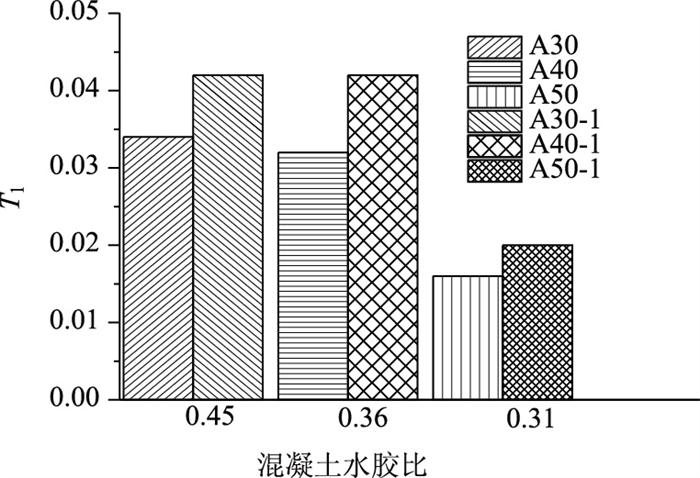
2.2 水胶比对混凝土匀质性的影响根据面积比得到的试件A30,A40,A50的匀质性指标T1分别为0.034,0.032,0.016,A50的匀质性最好,A40的匀质性次之,A30的匀质性最差。A30-1,A40-1,A50-1的匀质性指标T1分别为: 0.042,0.042,0.02,A50-1的匀质性最好,A40-1和A30-1的匀质性相同。据3×3区域骨料面积比得到的匀质性,试件A30,A40,A50相对A30-1,A40-1,A50-1的匀质性分别提升了19.0%,23.8%,20.0%。
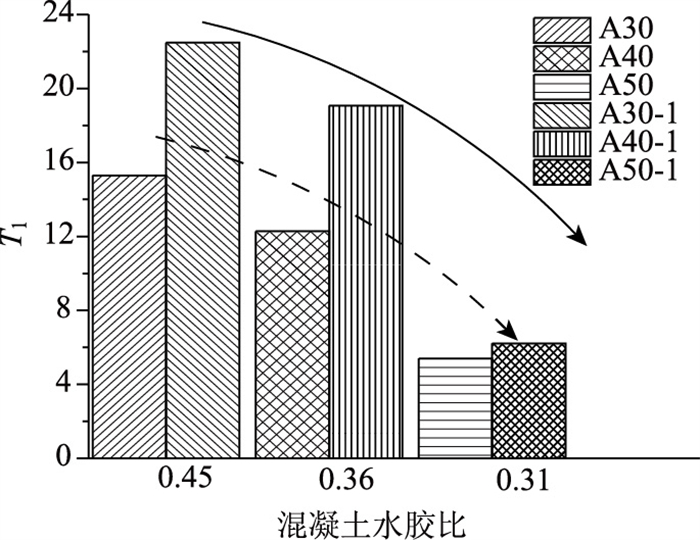
根据划分的3×3区域,试件A30,A40,A50的匀质性指标T2分别为15.30,12.28,5.40,A30-1,A40-1,A50-1的匀质性指标T2分别为22.48,19.08,6.22。根据3×3区域颗粒数量比得到的匀质性,试件A30,A40,A50相对A30-1,A40-1,A50-1的匀质性分别提升了31.9%,35.6%,13.2%。
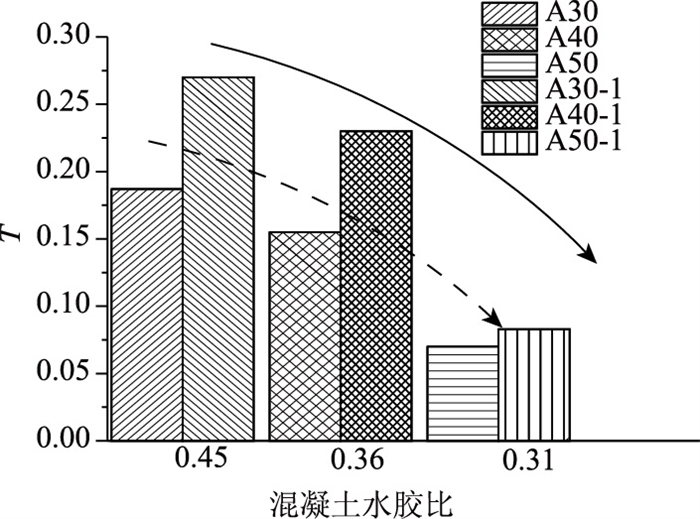
由图 4~图 6和表 8分析可知,采用不同的配合比设计方法,相同水胶比条件时,试件A30,A40,A50相对A30-1,A40-1,A50-1的匀质性分别提升了30.7%,32.6%,15.7%。采用相同的配合比设计方法,不同水胶比条件下,A40比A30提升了17.1%,A50比A40提升了54.8%;A40-1比A30-1提升了14.8%,A50-1比A40-1提升了63.9%。这说明试件的匀质性随混凝土强度等级的增加而提升。
|
| 图 4 混凝土水胶比和T1之间关系 Fig. 4 Relationship between water-binder ratio of concrete and T1 |
| |
|
| 图 5 混凝土水胶比和T2之间关系 Fig. 5 Relationship between water-binder ratio of concrete and T2 |
| |
|
| 图 6 混凝土水胶比和T之间关系 Fig. 6 Relationship between water-binder ratio of concrete and T |
| |
| 编号 | 强度等级 | 石粉/(kg·m-3) | 骨料面积/mm2 | 骨料数量 | 骨料最大粒径/mm | 水胶比 | T1 | T2 | T |
| A30 | C30 | 85.0 | 9 203.1 | 138 | 31.5 | 0.45 | 0.034 | 15.30 | 0.187 |
| A30-1 | C30 | 101.5 | 10 167.9 | 189 | 31.5 | 0.042 | 22.48 | 0.270 | |
| A40 | C40 | 83.1 | 8 133.4 | 327 | 31.5 | 0.36 | 0.032 | 12.28 | 0.155 |
| A40-1 | C40 | 94.7 | 9 672.4 | 381 | 31.5 | 0.042 | 19.08 | 0.230 | |
| A50 | C50 | 89.2 | 11 540.4 | 232 | 19 | 0.31 | 0.016 | 5.40 | 0.070 |
| A50-1 | C50 | 87.4 | 10 568.3 | 367 | 19 | 0.02 | 6.22 | 0.083 |
2.3 机制砂石粉含量对混凝土匀质性的影响
按照式(1)分配骨料的比例时,试件A30机制砂的用量为780 kg,A30-1机制砂的用量为930 kg,试件A30石粉含量相比试件A30-1减少了16.3%。同理,试件A40石粉含量相比试件A40-1减少了12.2%,匀质性均比原配合比试件的匀质性增加,见表 8。试件A50石粉含量和试件A50-1石粉含量相差不大,试件A50骨料的比例是按照式(1)致密堆积比例堆积,A50的匀质性指标T比A50-1减小了0.013。A30机制砂混凝土试件的匀质性高于试件A30-1,一方面是由于试件A30的石粉含量偏少;另一方面,试件A30的粗砂和细砂考虑了骨料的级配,使其致密堆积,从而改善了混凝土的匀质性。
2.4 骨料级配对机制砂混凝土匀质性的影响混凝土试件A30-1和A40-1粒径区间0~5 mm,5~10 mm,10~19 mm,19~31.5 mm的骨料分别按照1.00 ∶0.21∶0.52∶0.31,1.00∶0.23∶0.59∶0.35的比例分配。混凝土试件A30和A40采用最大密实度理论,按照1.00∶0.39∶0.53∶0.50比例重新分配,A50-1的骨料比例为1.00∶0.53∶0.80,A50混凝土试件骨料按照1.000:0.39:0.85重新分配。A50的匀质性指标比A50-1减小了0.013,A30的匀质性指标比A30-1减小了0.083,A40的匀质性指标比A40-1减小了0.075。这说明骨料的比例按照式(1)分配时可以提升机制砂混凝土的匀质性。
2.5 骨料最大粒径对机制砂混凝土匀质性的影响从表 8看出,按照面积比的匀质性指标T1进行评价时,试件A30-1和A40-1的匀质性指标T1值相同,小于试件A50-1的匀质性T1值。试件A30和A40的匀质性指标T1值相差不大,同时也小于试件A50的匀质性。对比不同配合比设计方法、骨料最大粒径、水胶比、骨料级配,表明骨料的最大粒径对面积比的匀质性影响最大。
按照划分的3×3各区域骨料颗粒数量的匀质性指标T2进行评价时,A30>A40>A50,A30-1>A40-1>A50-1,说明骨料颗粒数量的匀质性随水胶比的增加而减小。
根据均匀性综合评判指标T判断,采用相同的配合比设计时,相比试件A30和A40,试件A50的均匀性最好。相比试件A30-1和A40-1,试件A50-1的均匀性最好。A30-1的T2值最大,说明A30-1混凝土中骨料颗粒数量在各个区域分布差异性大。综合T1和T2对T值的影响,T1分别占A30,A30-1,A40,A40-1匀质性T值的18.2%,15.6%,20.6%,18.3%,22.9%,24.1%。对比面积比和颗粒数量对匀质性的影响,面积比占了20%左右,混凝土试件A50,A50-1骨料的最大粒径为19 mm,匀质性T1值分别占T值的22.9%和24.1%,表明面积比对匀质性的影响也在增加。
3 结论本研究采用C30,C40,C50这3个混凝土强度等级,共6组混凝土试件,首先利用MATLAB软件对150 mm×150 mm×150 mm混凝土试件切片进行了二值化处理,再将二值化后的切片照片进行3×3等分处理,然后借助Image-Pro Plus软件读取每个区域骨料颗粒数量和面积。根据建立的匀质性评价模型公式,对比了水胶比、石粉含量、机制砂级配、机制砂混凝土匀质性的影响,主要结论如下。
(1) 试件A30,A40,A50相对A30-1,A40-1,A50-1的匀质性分别提升了30.7%,32.6%,15.7%,说明进行机制砂混凝土的配合比设计时,采用最大密实度理论,按照一定的比例提升粗骨料用量,减少细骨料用量,重新分配骨料的比例,可提升机制砂混凝土的匀质性。
(2) 不同水胶比条件下,A40比A30提升了17.1%,A50比A40提升了54.8%;A40-1比A30-1提升了14.8%,A50-1比A40-1提升了63.9%,说明试件的匀质性随混凝土强度等级的增加而提升。
(3) 骨料最大粒径、水胶比、骨料级配、石粉含量对机制砂混凝土的匀质性均有影响,其中骨料的最大粒径对机制砂混凝土的匀质性的影响最大。
| [1] |
GHAFOORI N, SPITEK R, NAJIMI M. Influence of Limestone Size and Content on Transport Properties of Self-Consolidating Concrete[J].
Construction and Building Materials, 2016, 127: 588-595.
DOI:10.1016/j.conbuildmat.2016.10.051 |
| [2] |
SOUZA A T, BARBOSA T F, RICCIO L A, et al. Effect of Limestone Powder Substitution on Mechanical Properties and Durability of Slender Precast Components of Structural Mortar[J].
Journal of Materials Research and Technology, 2020, 9(1): 847-856.
DOI:10.1016/j.jmrt.2019.11.024 |
| [3] |
YANG S, ZHANG J, AN X, et al. Effects of Fly Ash and Limestone Powder on the Paste Rheological Thresholds of Self-compacting Concrete[J].
Construction and Building Materials, 2021, 281: 122560.
DOI:10.1016/j.conbuildmat.2021.122560 |
| [4] |
郭寅川, 郝宸伟, 郭昊田, 等. 复掺矿料高寒隧道泵送混凝土优化设计与性能[J]. 公路交通科技, 2021, 38(1): 112-120. GUO Yin-chuan, HAO Chen-wei, GUO Hao-tian, et al. Optimum Design and Performance of Pumping Concrete Mixed with Composite Mineral Material for Tunnel in Alpine Region[J]. Journal of Highway and Transportation Research and Development, 2021, 38(1): 112-120. DOI:10.3969/j.issn.1002-0268.2021.01.014 |
| [5] |
田晓宇, 白英, 李平. 基于均匀试验方法的轻骨料混凝土强度研究[J]. 内蒙古农业大学学报(自然科学版), 2015, 36(4): 105-108. TIAN Xiao-yu, BAI Ying, LI Ping. Strength of Lightweight Aggregate Concrete Based on the Uniform Test Method[J]. Journal of Inner Mongolia Agricultural University (Natural Science Edition), 2015, 36(4): 105-108. |
| [6] |
齐鹏, 李海亮, 程景瑜, 等. 抗裂剂对钢壳混凝土收缩及热学性能的影响[J]. 公路交通科技, 2022, 39(2): 117-124. QI Peng, LI Hai-liang, CHENG Jing-yu, et al. Influence of Anti-cracking Agent on Shrinkage and Thermal Properties of Steel Shell-concrete[J]. Journal of Highway and Transportation Research and Development, 2022, 39(2): 117-124. |
| [7] |
王立川, 傅蕾, 王永林, 等. 铁路隧道衬砌机制砂混凝土耐久性能试验研究[J]. 地下空间与工程学报, 2021, 17(6): 1857-1863. WANG Li-chuan, FU Lei, WANG Yong-lin, et al. Experimental Study on Durability of Machine-made Sand Concrete for Railway Tunnel Lining[J]. Chinese Journal of Underground Space and Engineering, 2021, 17(6): 1857-1863. |
| [8] |
张斌. 西北寒旱地区混凝土抗氯离子渗透性能影响因素[J]. 公路交通科技, 2020, 37(11): 8-14, 80. ZHANG Bin. Influencing Factors of Chloride Ion Permeability Resistance of Concrete in Cold and Arid Regions of Northwest China[J]. Journal of Highway and Transportation Research and Development, 2020, 37(11): 8-14, 80. DOI:10.3969/j.issn.1002-0268.2020.11.002 |
| [9] |
解国梁, 申向东, 姜伟, 等. 玄武岩纤维-风积沙混凝土抗冲击试验研究[J]. 公路交通科技, 2021, 38(8): 9-15. XIE Guo-liang, SHEN Xiang-dong, JIANG Wei, et al. Experimental Study on Impact Resistance of Basalt Fiber-aeolian Sand Concrete[J]. Journal of Highway and Transportation Research and Development, 2021, 38(8): 9-15. DOI:10.3969/j.issn.1002-0268.2021.08.002 |
| [10] |
ABO DHAHEER M S, KULASEGARAM S, KARIHALOO B L. Simulation of Self-compacting Concrete Flow in the J-ring Test Using Smoothed Particle Hydrodynamics (SPH)[J].
Cement and Concrete Research, 2016, 89: 27-34.
DOI:10.1016/j.cemconres.2016.07.016 |
| [11] |
张守祺, 傅宇方, 赵尚传, 等. 浇筑密实度和均匀度对结构混凝土耐久性的影响[J]. 建筑材料学报, 2014, 17(5): 797-803. ZHANG Shou-qi, FU Yu-fang, ZHAO Shang-chuan, et al. Effect of Casting Consolidation and Uniformity on Durability of Structural Concrete[J]. Journal of Building Materials, 2014, 17(5): 797-803. DOI:10.3969/j.issn.1007-9629.2014.05.008 |
| [12] |
吴义林, 严文佩, 陈朝晖. 基于显微硬度法测定混凝土匀质性的研究[J]. 山西建筑, 2017, 43(12): 96-97. WU Yi-lin, YAN Wen-pei, CHEN Zhao-hui. Investigation on the Influence Factors of Homogeneity of Concrete by Microhardness Tester[J]. Shanxi Architecture, 2017, 43(12): 96-97. |
| [13] |
邢锋, 张鸣, 丁铸. 新拌混凝土的匀质性对其性能的影响[J]. 硅酸盐通报, 2007, 26(3): 588-592. XING Feng, ZHANG Ming, DING Zhu. Effect of Homogeneity on Properties of Concrete[J]. Bulletin of the Chinese Ceramic Society, 2007, 26(3): 588-592. |
| [14] |
SALEH E, TARAWNEH A, DWAIRI H, et al. Guide to Non-destructive Concrete Strength Assessment: Homogeneity Tests and Sampling Plans[J].
Journal of Building Engineering, 2022, 49: 104047.
|
| [15] |
邓陈记, 陈玉宏, 陈华鑫, 等. 水泥稳定基层用再生粗骨料匀质性评价及控制技术研究[J]. 公路, 2020, 65(9): 251-255. DENG Chen-ji, CHEN Yu-hong, CHEN Hua-xin, et al. Study on Homogeneity Evaluation and Control Technology of Recycled Coarse Aggregate for Cement Stabilized Base[J]. Highway, 2020, 65(9): 251-255. |
| [16] |
顾瑞, 丁庆军, 吕亚林, 等. 轻骨料混凝土匀质性测试与评价方法研究[J]. 武汉理工大学学报, 2020, 42(9): 13-19. GU Rui, DING Qing-jun, LV Ya-lin, et al. Study on Test and Evaluation Method of Lightweight Aggregate Concrete Homogeneity[J]. Journal of Wuhan University of Technology, 2020, 42(9): 13-19. |
| [17] |
齐华, 张叠, 范卿, 等. 基于搅拌图像的混凝土匀质性检测技术研究[J]. 中国工程机械学报, 2022, 20(1): 91-94. QI Hua, ZHANG Die, FAN Qing, et al. Research on Concrete Homogeneity Detection Technology Based on Mixing Image[J]. Chinese Journal of Construction Machinery, 2022, 20(1): 91-94. |
| [18] |
王谦. 紧密堆积理论在设计活性粉末混凝土中的应用[J]. 混凝土, 2012(12): 129-131. WANG Qian. Application of Close Packing Theory in the Design of RPC[J]. Concrete, 2012(12): 129-131. |
| [19] |
黄兴震, 陈红鸟, 王青原, 等. 基于Image-pro Plus软件混凝土断裂面骨料和浆体面积的计算方法及应用[J]. 贵州大学学报(自然科学版), 2016, 33(6): 4. HUANG Xing-zhen, CHEN Hong-niao, WANG Qing-yuan, et al. The Method and Application Based on the Image-pro Plus to Calculate the Concrete Aggregate and Cement Paste Area of the Fracture Surface[J]. Journal of Guizhou University (Natural Science Edition), 2016, 33(6): 4. |